
Sri Lanka Travel Tips · History
Sigiriya History: King Kashyapa and the Lion Rock
Long before it became Sri Lanka’s most photographed landmark, Sigiriya was the stage for a royal murder, a family feud and one of the boldest building projects of the ancient world. Knowing the story makes the climb far more meaningful, so here is Sigiriya history in a few minutes.
Before the king: a home for monks
The caves around the base of the rock were used by Buddhist monks centuries before any palace was built. Some still carry short inscriptions in early Brahmi script, recording gifts of caves to the monastic community. You pass several of these rock shelters in the boulder gardens on the way up.
King Kashyapa and the palace in the sky
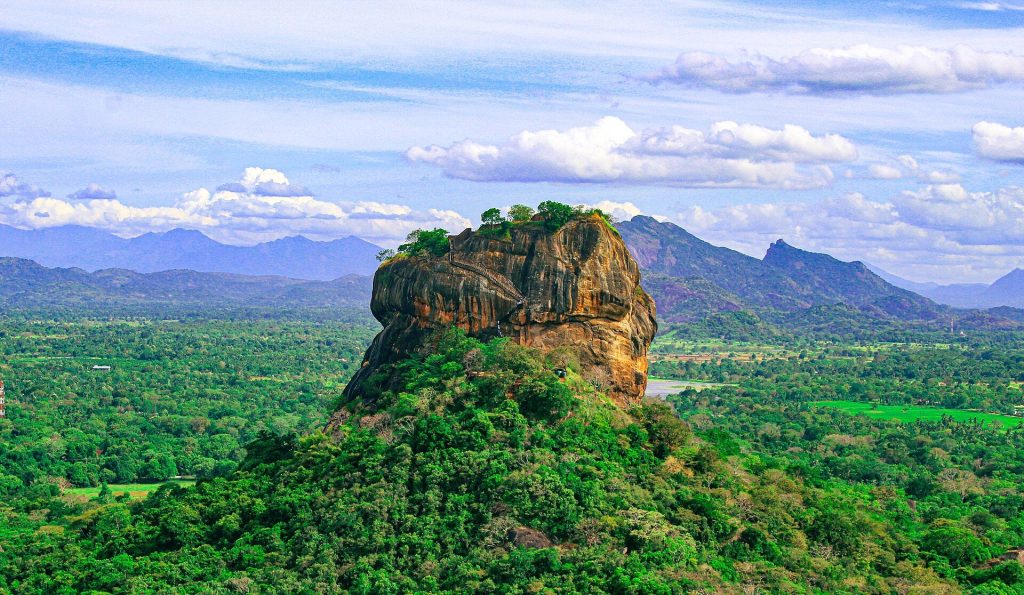
The story most people know begins in the late fifth century. Kashyapa, a son of King Dhatusena of Anuradhapura, seized the throne from his father. The rightful heir, his half-brother Moggallana, fled to India and vowed to return. Fearing an attack, Kashyapa moved his capital to this huge granite rock and turned it into a fortress palace.
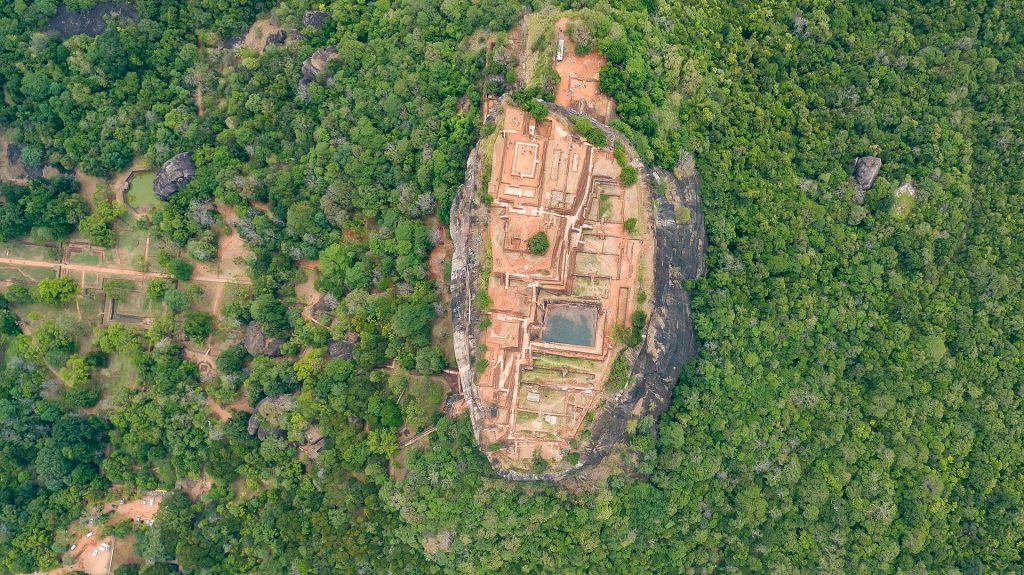
Around the rock he laid out moats, ramparts and gardens; on its face he built a giant lion of brick and plaster, giving the site its name, Sinha-giri, the Lion Rock; and on the summit he built his palace, with pools cut into the stone. According to the chronicles, Moggallana returned with an army after about eighteen years. Kashyapa rode out to meet him on the plain, and when the battle turned against him, he took his own life.
Some of the oldest gardens in Asia
The royal gardens at the foot of the rock are among the oldest surviving landscaped gardens in Asia. The water gardens are laid out in perfect symmetry, with pools, channels and underground conduits; some fountains still bubble after heavy rain. Beyond them, the boulder gardens use natural rocks as foundations for pavilions, and terraced gardens climb towards the rock face.
The frescoes and the Mirror Wall
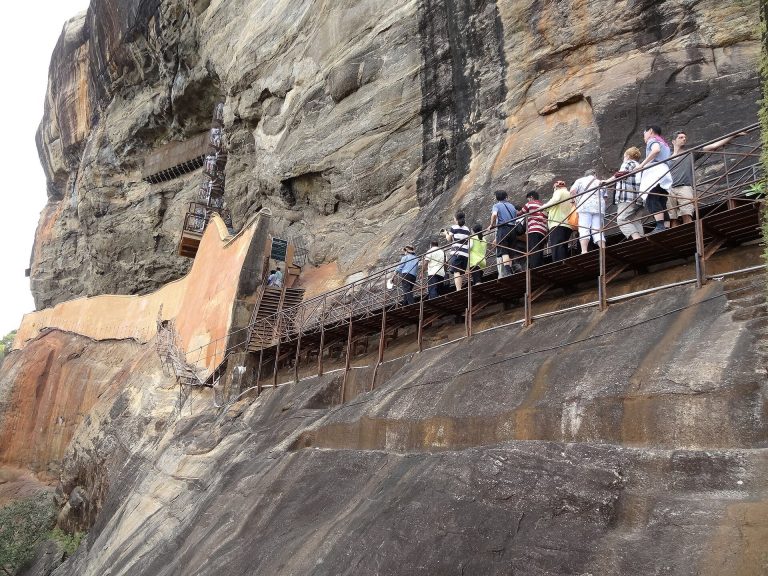
Halfway up the west face, a sheltered pocket of rock holds the famous paintings of women, often called the Sigiriya maidens. Scholars still debate who they are: celestial nymphs, ladies of the court or goddesses. Only about twenty figures survive today, but the original gallery may have been far larger.
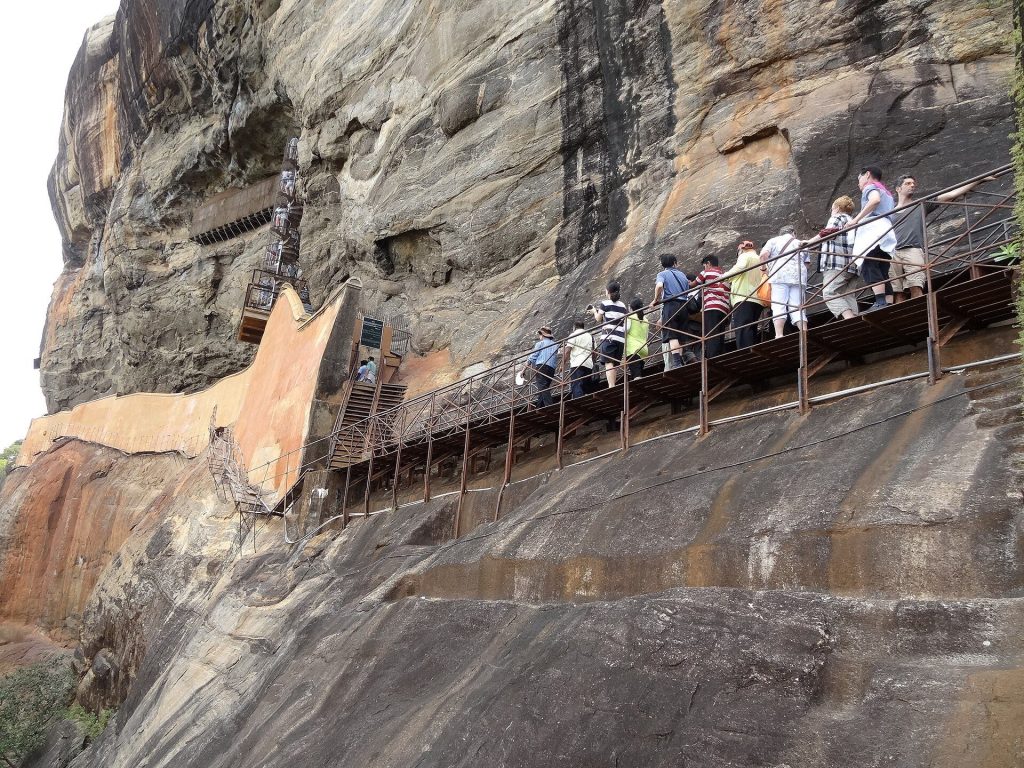
Just beyond, the Mirror Wall was once polished so smoothly that the king could see his reflection. From roughly the eighth century, visitors scratched short poems onto it, praising the paintings and the view. These Sigiri graffiti are among the earliest examples of Sinhala writing and poetry.
After Kashyapa: monastery, jungle and rediscovery
After Kashyapa’s death, the capital returned to Anuradhapura and Sigiriya was handed back to the monks, who used it as a monastery for several centuries. It was later abandoned and swallowed by jungle, until British officers and archaeologists described the ruins again in the nineteenth century. Excavation and conservation continued through the twentieth century, and in 1982 Sigiriya was inscribed as a UNESCO World Heritage Site.
See the history for yourself
The best way to understand Sigiriya is to walk it in order: museum, gardens, frescoes, Mirror Wall, Lion Terrace and summit. Our Sigiriya tour page explains each stop, and a private Sigiriya day tour from Colombo gives you time to see it all without a group schedule. To explore more of the ancient kingdoms, take a look at our 3-day Cultural Triangle tour.
Frequently asked questions
Who built Sigiriya?
Sigiriya’s palace and fortress were built by King Kashyapa I in the late fifth century CE, although monks had used the caves at its base much earlier.
Why is Sigiriya called Lion Rock?
Kashyapa built a huge lion of brick and plaster at the entrance to the final staircase. Only its paws survive, but the name Sinha-giri, Lion Rock, remains.
How old are the Sigiriya frescoes?
The frescoes date from the late fifth century, making them around 1,500 years old.
When did Sigiriya become a UNESCO World Heritage Site?
Sigiriya was inscribed as a UNESCO World Heritage Site in 1982.
Is a guide needed to understand Sigiriya?
Not necessarily. Our drivers explain the main story on the way, and licensed site guides are available at the entrance if you want a detailed tour.